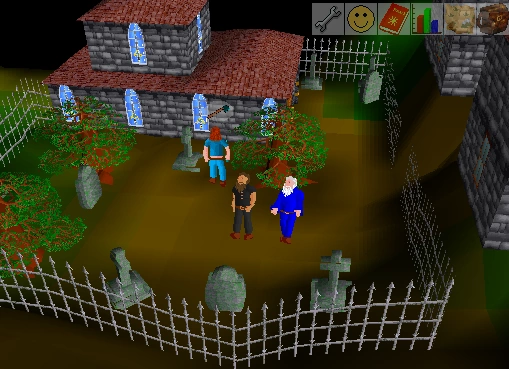
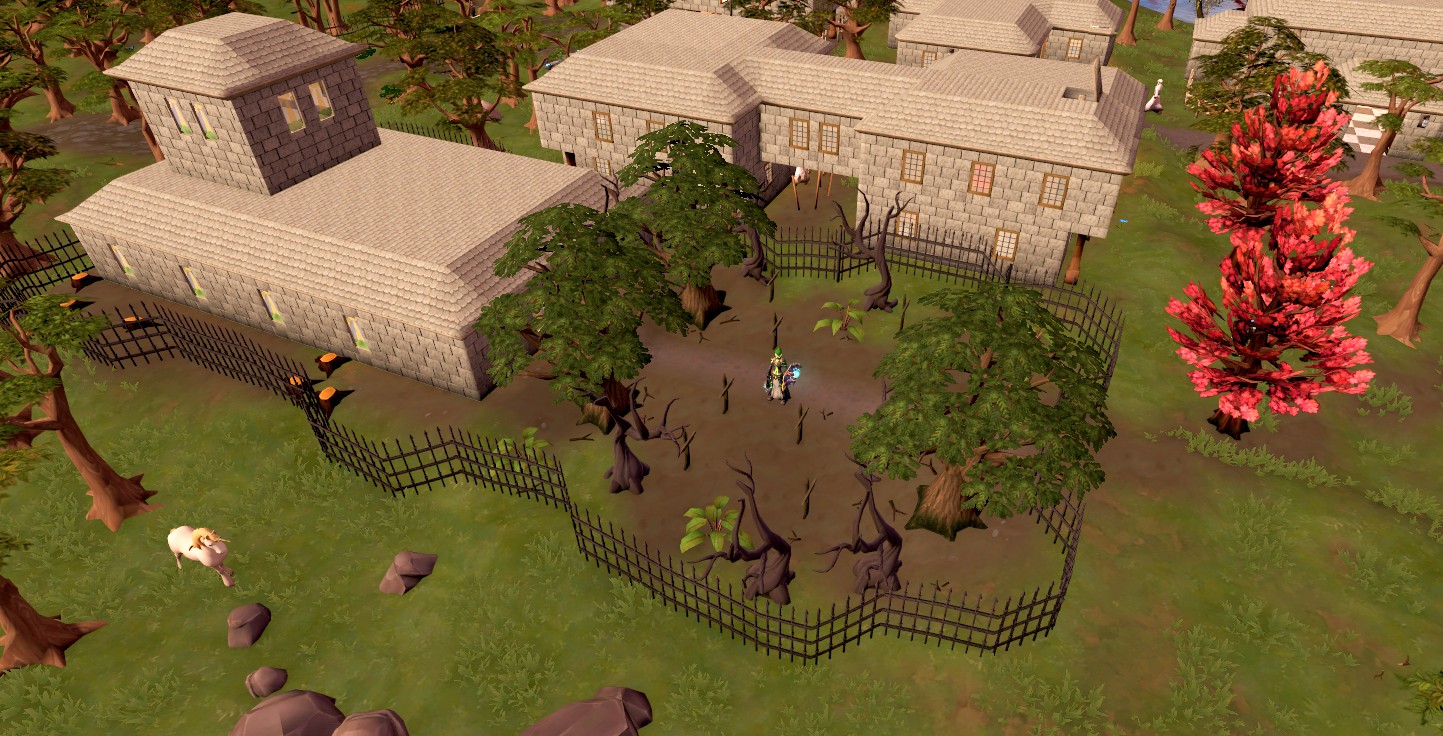
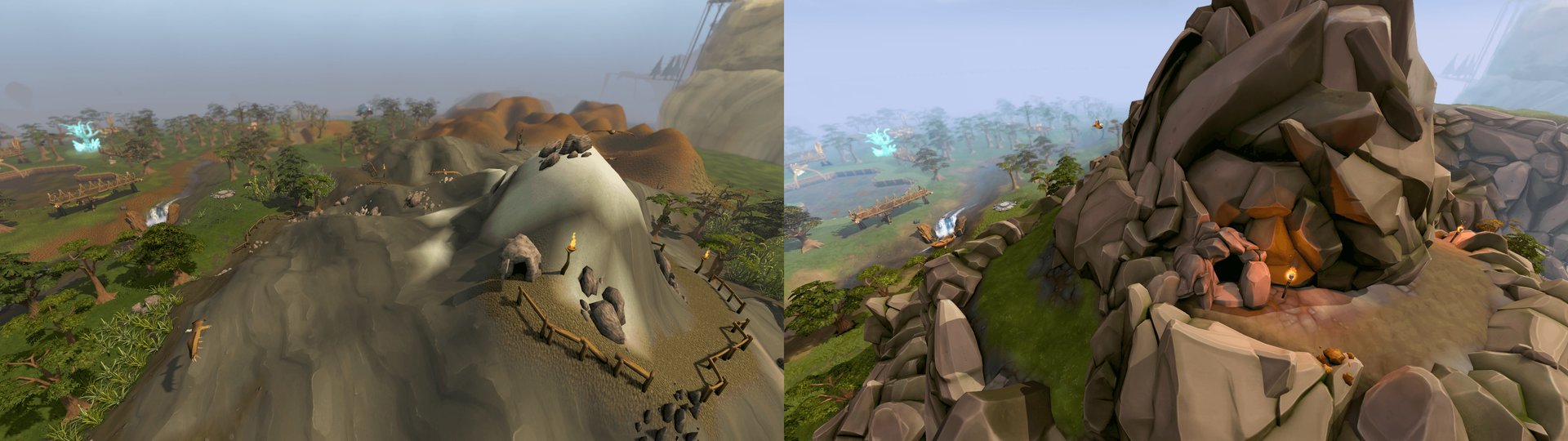
Visual comparison between RuneScape Classic (2001) and RuneScape 3 (2025).
RuneScape is an MMORPG (Massively Multiplayer Online Role-Playing Game).
It allows a large community of players to interact by skilling, questing, or taking down bosses together. The game has evolved over the years, changing drastically from RuneScape Classic to RuneScape 2, and eventually to RuneScape 3. Each version brought major updates to the graphics and gameplay style. One of the things that set RuneScape apart early on was that it ran in a browser, which made it accessible even on low-end school or library computers. It didn’t require a download, which was a big deal back then. The game has been around since 2001 and has been a part of my life since childhood. I still remember going to the library with friends just to play it.
As mentioned earlier, this site will briefly cover various activities in RuneScape. One section will introduce Solak, a popular boss known as the Guardian of the Grove. Solak is one of the Guardians of Guthix who is a God that represents balance. We’ll also go over how RuneScape’s questing system stands out from other MMOs, especially in how it uses storytelling, dialogue choices, and puzzle mechanics instead of just fetch or kill tasks. Quests in RuneScape often tie into larger world events and offer meaningful rewards, which keeps them interesting even for veteran players.
Finally, we’ll take a quick look at how skilling works in the game, from gathering and production skills like Mining and Smithing to combat-adjacent ones like Prayer and Summoning. Many of these skills can be trained independently of combat and are essential for both economic progression and endgame content.
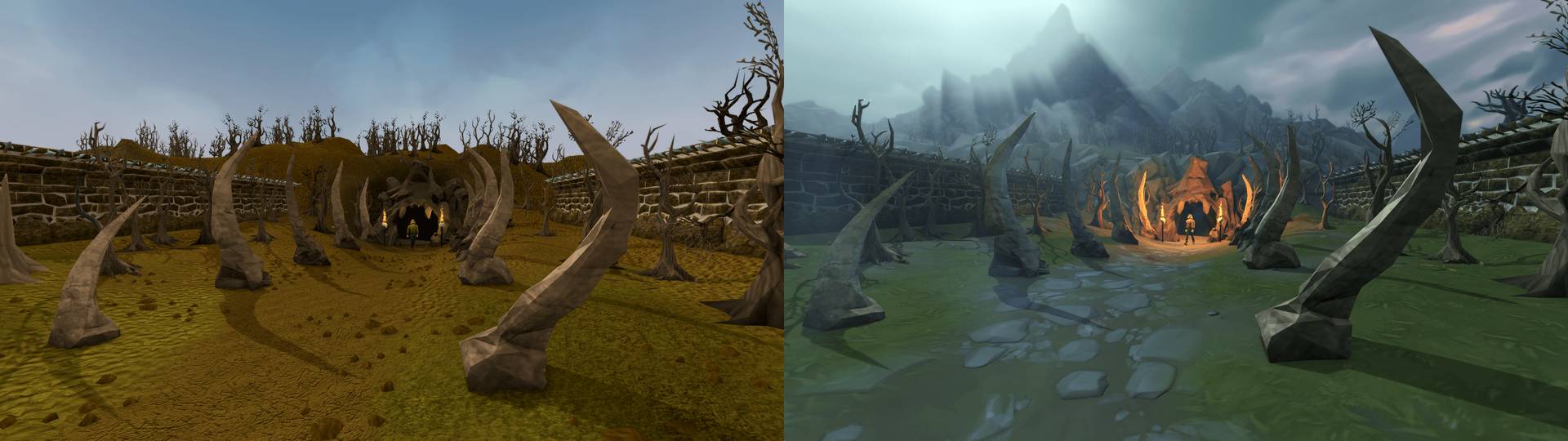
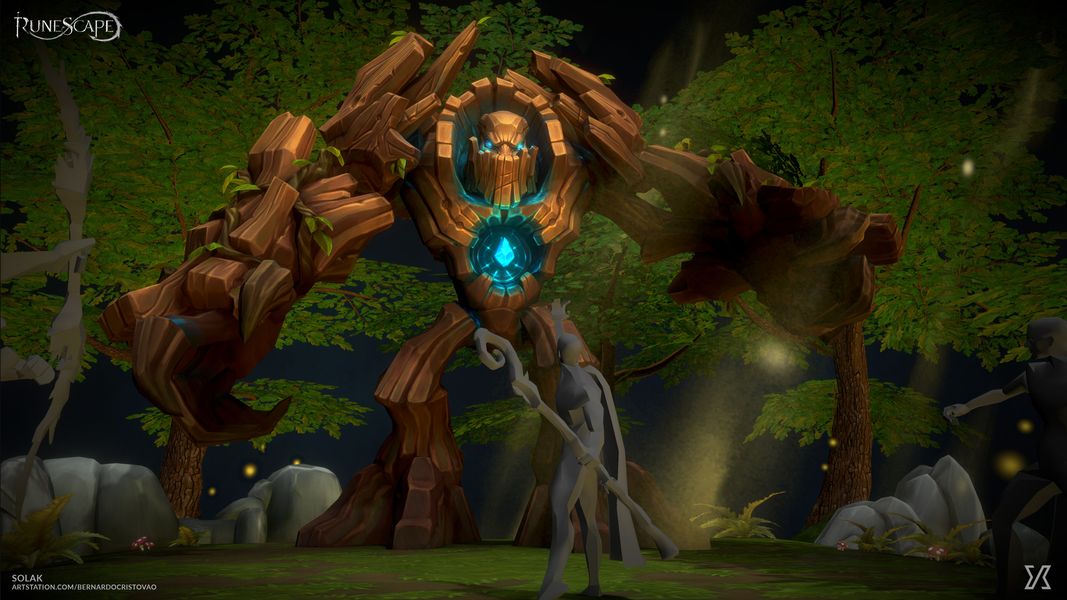
Solak encounter with a place holder for a player. Source:
RuneScape Wiki
Solak Lore
Solak is a Guardian of Guthix and a being born of the Anima Mundi, created to protect the Lost Grove, a sacred island tied to the planet's life force. During the Second Age, he was aided by four elite elf warriors sent by Seren, one of whom, Erethdor, turned against them after becoming corrupted by blight magic. Solak and the other elves defeated Erethdor, but Solak absorbed half of his soul, which gradually corrupted him over thousands of years. By the Sixth Age, Erethdor had nearly overtaken Solak's mind, prompting the World Guardian, Merethiel, and a group of adventurers to intervene. After a brutal battle inside and outside Solak’s mind, they succeeded in freeing him. Solak then vowed to help restore the Grove alongside Merethiel, acknowledging the cost of Erethdor’s betrayal but finding closure and purpose moving forward.
Fight Dynamics & Loot
The fight against Solak allows for solo players or teams of up to seven to take on the challenge, making it one of the few high-level PvM encounters that supports large group coordination. He is most commonly hunted for Erethdor’s Grimoire and its pages, which are used to charge the book and activate its powerful passive combat effects. This item is especially valuable for high-tier bossing due to its crit-enhancing abilities. Solak also drops other rare and sought-after uniques, including the Blightbound Crossbows (Main-Hand and Off-Hand), Cinderbane Gloves, the Ancient Elven Ritual Shard, and a boss pet. Outside of these rare drops, he provides high-value common loot like herbs, salvage, and potions, these items support player progression and provide consistent rewards for those grinding the encounter. His drop table and mechanical complexity make him a popular boss for experienced PvMers looking for both challenge and profit.
Questing, What is it About?
The Lore & Journey of RuneScape
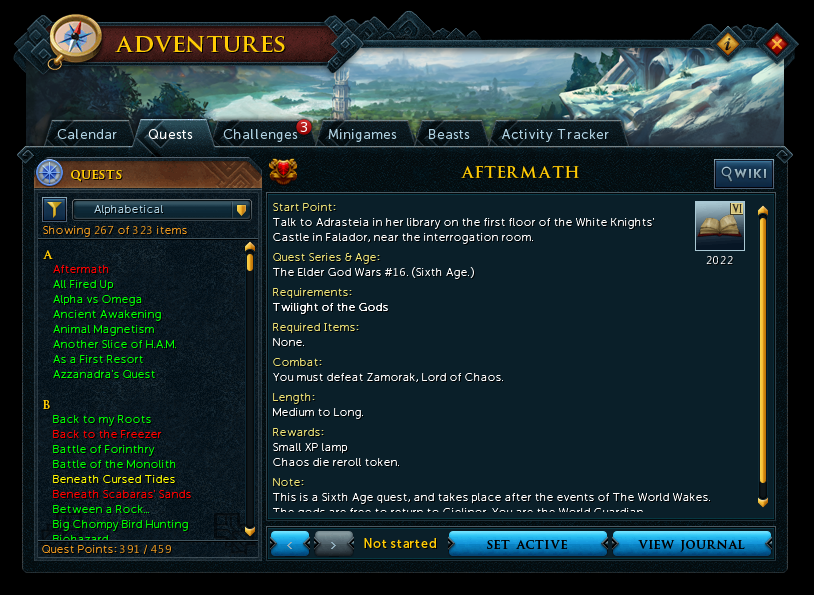
Picture of the Quest Log from my Character.
RuneScape quests take players on a journey across Gielinor, offering experiences far deeper than the typical fetch-or-kill tasks seen in many MMOs. While some early quests do rely on simple mechanics like item collection or basic combat, later content introduces rich lore, complex characters, and branching storylines. These quests explore the game’s history, gods, factions, and regions… effectively letting players experience Gielinor’s evolution through different ages. Quests also reward players with powerful, game-altering items. One sought-after reward is the ability to make the Ring of Vigour passive, eliminating the need to swap it mid-combat for its adrenaline-saving buff, an advantage highly valued in high-level PvM.
Not all quests are serious or lore-heavy, though. Some offer light-hearted, charming storylines that stand out for their creativity and humor. A great example is Violet is Blue, a holiday-themed quest that follows a young girl’s dream to visit Yetis in the snowy mountains. These kinds of quests don’t necessarily grant powerful combat upgrades but add emotional depth, humor, and worldbuilding to the game. They help RuneScape feel more alive and give players a break from intense combat or lore-driven arcs. While I’m primarily a PvMer, I really enjoyed this quest because it was emotionally moving and genuinely touching. It was a quiet break from the daily grind of PvM or skilling.
What makes RuneScape’s quest system unique is its commitment to storytelling over grinding. Many quests feature voiced dialogue, puzzle-solving, moral decisions, and unique mechanics like stealth or transformation. Quest lines such as Plague’s End or The World Wakes significantly alter the world and unlock new content, making the completion of quests feel impactful. Instead of being optional side activities, quests in RuneScape are tightly woven into the main gameplay loop, and many skills, items, and areas are gated behind them—ensuring that lore and exploration remain essential to progression. This is one of the key things that sets RuneScape’s MMO apart from others and adds real depth to the game. It’s something I personally value and appreciate, your decisions actually matter here.
Skilling
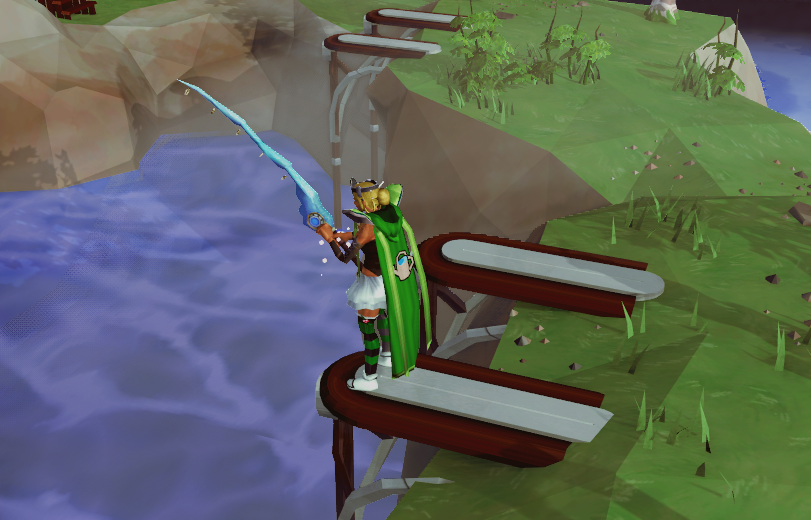
Picture of my friend fishing in Runescape. Credit to my friend Jake for the photo.
RuneScape skills offer a lot of advantages for player progression, helping players meet key requirements for important quests and unlocking new content. There are 29 skills in RuneScape, and nearly all of them are tied into quest lines or game systems in some way. Many skills also complement each other as you level, for example, Farming can be used to grow herbs, which are then used with Herblore to make potions. One of the more powerful skills, classified as an Elite skill, is Invention. This skill allows players to engineer weapon, armor, and tool gizmos that apply powerful effects. These effects can increase damage per second or assist with skilling, for example, giving players a chance to gather double resources during certain activities.
RuneScape’s skill system is diverse, with skills falling into categories like combat, gathering, artisan, and support. Combat skills are used for fighting bosses, completing Slayer tasks, and progressing through dangerous quests, while non-combat skills like Fishing, Woodcutting, and Divination offer more relaxed ways to train. This flexibility lets players focus on the content they enjoy most, whether that’s high-end PvM or casual skilling. Many players use these skills to fuel the in-game economy—gathering resources, refining them, and selling them to others who don’t want to train those skills themselves. This creates a player-driven market where skills like Mining, Smithing, and Crafting remain profitable and relevant across all stages of progression.